01 / THE MESSAGE“Are you coming Saturday?”You want to go. But you ask who else is coming before you answer. Then you wonder whether that sounded strange.You type “Yes, sounds good,” add an exclamation mark, remove it, and leave the reply unsent. Now you’re thinking about how long you’ve taken to answer, too.
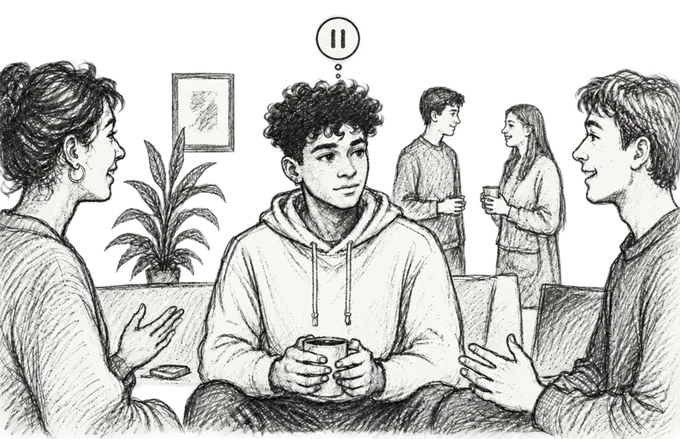
02 / THE GROUPYou had something to add.Someone at lunch mentions a show you’ve been watching. You have something to say.But another person starts talking, so you wait. Then you rehearse how you’ll begin. By the time there’s a gap, they’ve moved on. You smile and keep listening. You wanted to join in.
03 / THE MOMENT AFTER“Was that a weird thing to say?”You’re at home, trying to get some work done, when one sentence from earlier comes back.You replay their expression, then check your messages. Nothing suggests anything is wrong. But you’re still trying to get enough certainty to leave it alone.
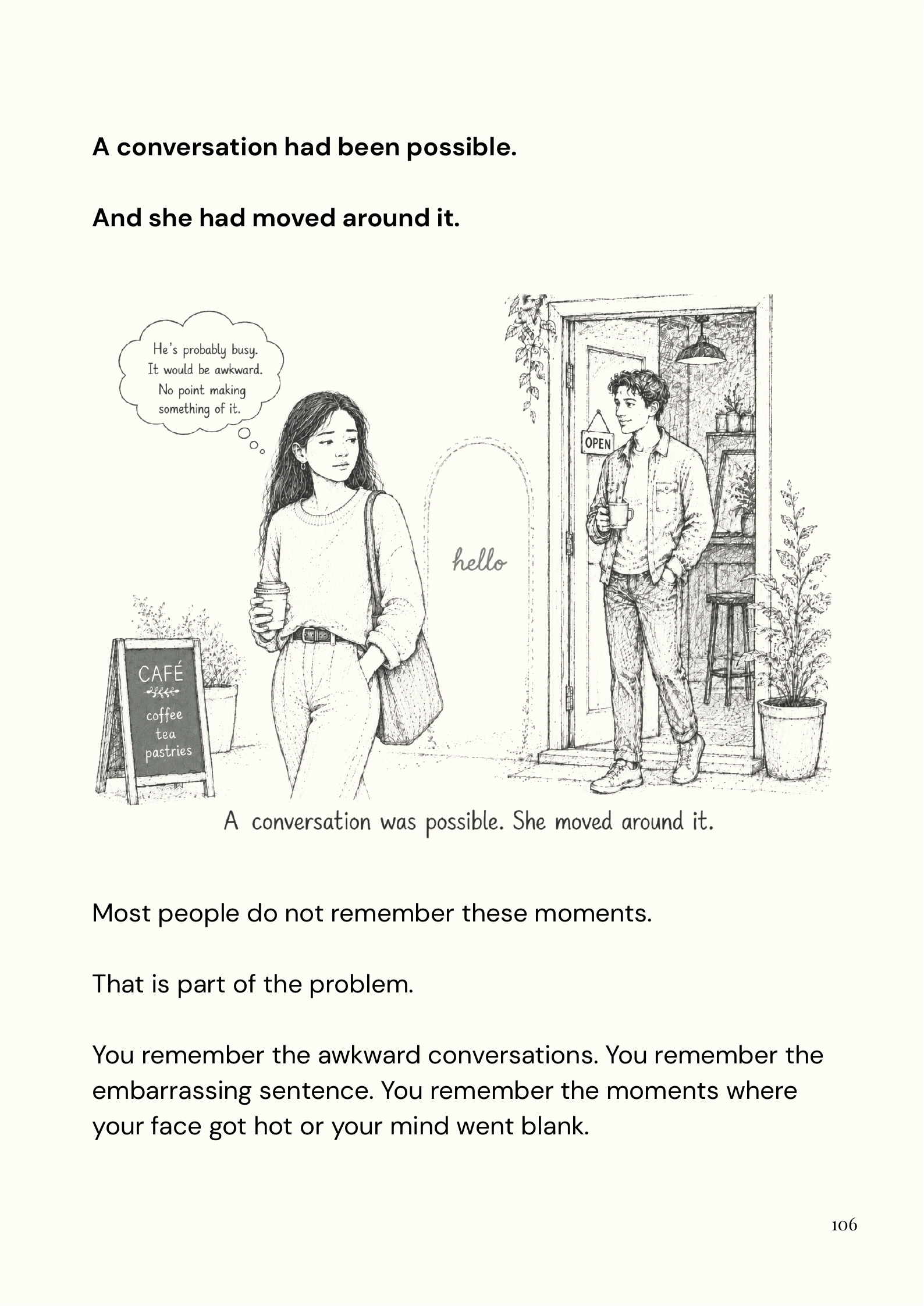
IN CONVERSATIONSThe follow-up question.You’re interested in what someone said. Practice asking about it while the conversation is still there, instead of waiting for the question to sound perfect.
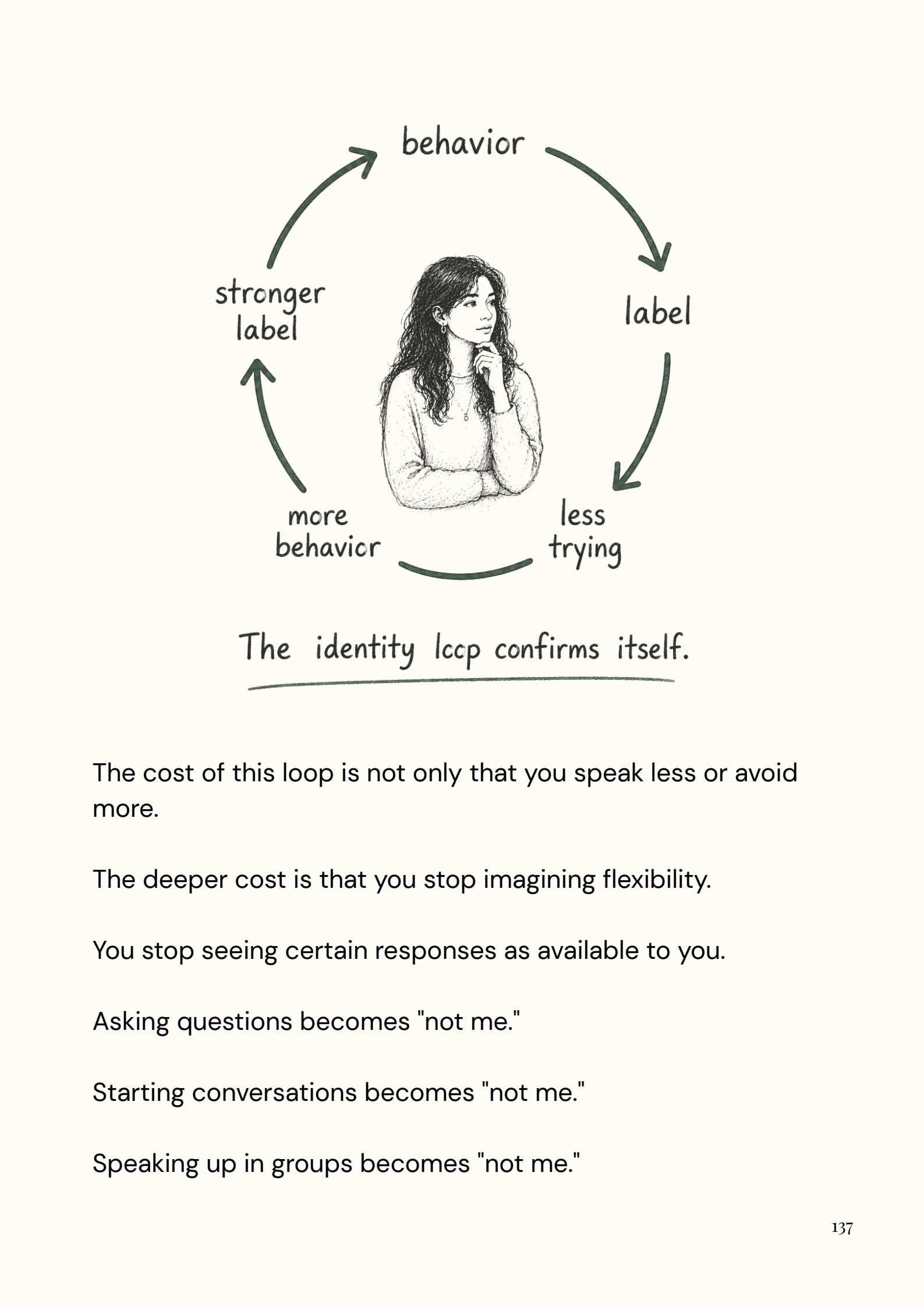
IN EVERYDAY TASKSThe reply you keep editing.You’ve said what you mean, but you’re still checking how it might sound. The book looks at choosing a small change in that familiar checking.
WITH PEOPLE YOU LIKEA little more of your own opinion.There’s something you’d like them to know about you. Start with an ordinary preference or thought you would usually keep to yourself.
FROM UNDERSTANDING SOCIAL ANXIETY · PAGE 181 The Smallest Useful Shift To make that practical, use three questions: Where does this pattern show up most often? Start with ordinary repetition. Messages. Greetings. Meetings. Calls. Group conversations. The moments after social contact when replaying begins. Do not start with the biggest, most terrifying situation just because it seems more serious. The brain learns through repetition, and repetition is easier to find in normal life. What is the old response? Be specific. “I get anxious” is true, but too broad to practice with. What do you actually do? Do you delay? Check? Apologize too much? Stay quiet? Ask questions but never share? Leave early? Replay? Make the response clear enough that you can catch it beginning. What is the smallest useful new response? Choose something that teaches the opposite of the old rule. If the old rule says, “Do not send until you feel certain,” the useful response might be one clarity check and send. If the old rule says, “Do not speak unless the sentence is perfect,” the useful response might be one simple sentence before certainty arrives.